The Taferner Winery is one of the leading estates in the Carnuntum region in Austria. Since 2022, Karoline Taferner has been managing the family business, drawing on a deep well of knowledge and experience. We sat down with the young winemaker for a conversation about roots, innovation, and the beauty of her craft.
Karo, your winery is a true family business. What defines it?
Karoline Taferner: We only started bottling our own wines in 1988, so our winery is still relatively young. For generations, we had a small vineyard, but the grapes were pressed just for our own consumption. Until I was about ten, our farm still had animals—pigs, cattle, a few rabbits and chickens. A proper mixed farm. Back then, we also grew sugar beets, wheat, and potatoes alongside the vines. Around the year 2000, our family decided to focus entirely on winemaking. The farmland was leased out, and the animals were sold.
My life has always been deeply connected to nature and family. Three generations still live and work together on our estate every single day. I was involved early on—helping with harvest, bottling, labeling, and even in our Heuriger wine tavern, which we now lease out. We were allowed to ride the tractor, smell the wine, and drink our own grape juice daily. I can’t really remember when I had my first sip of wine—but it was probably earlier than most! (laughs)
We work organically and sustainably, both in the vineyard and in the cellar. We believe that quality is created in the vineyard, not in the winery. That’s why we spend so much time among the vines ourselves. We only process grapes from our 25 hectares of vineyards—we know every single vine, and later, every barrel.
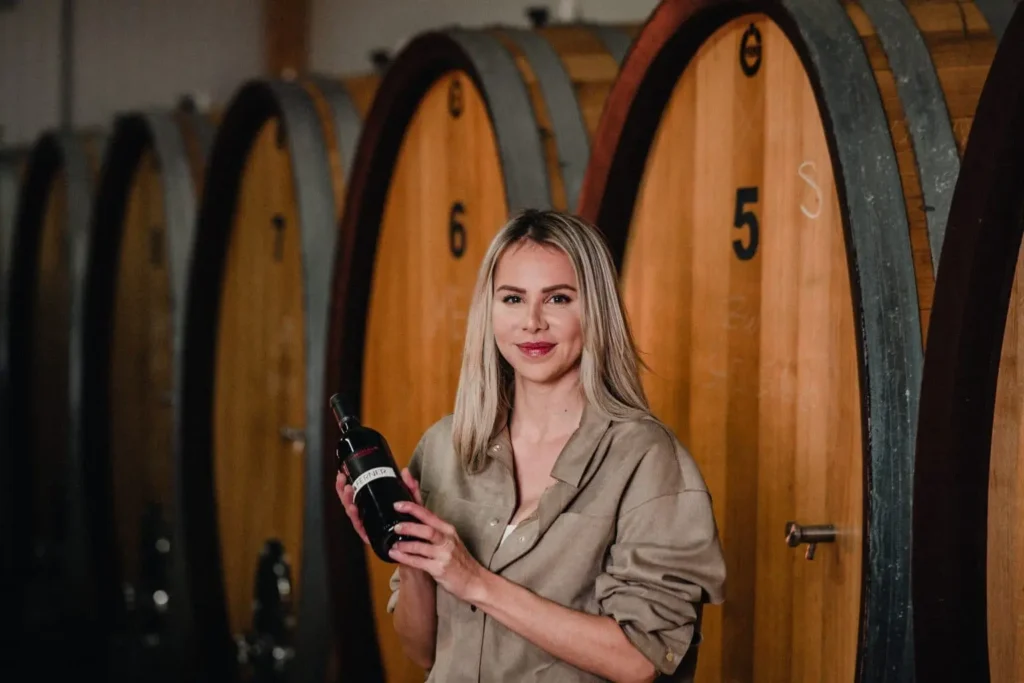
As managing director, what do you do differently from your family before you—and how does your degree in oenology influence your work?
I started studying viticulture at BOKU University in Vienna in 2015 and went abroad a few times to gain experience. I did one harvest in New Zealand and two in Australia, working in the cellar on red wines at three different wineries. I came back to Carnuntum in 2017. My father retired in October 2022, and since then, I’ve been running the estate. He still works hard, though—and so does my grandfather, who’s 88. Working in the vineyard keeps you young!
In 2019, we converted to organic cultivation, and starting with the 2022 vintage, all our wines are officially certified organic. I’ve refined small details in the cellar—things that help express the character of our individual sites: spontaneous fermentation for reds, temperature control, pressing white grapes with or without stems, fermenting whole clusters for reds, using gravity instead of pumping… My focus is on our single-vineyard white and red wines.
Austria has quite a few successful female winemakers, and empowerment is a big topic in the industry. Are you connected with other women in wine—and how do you see competition in your field?
I’m lucky here in Carnuntum to work alongside many amazing women. We’re connected, often friends, and we support each other. For me, gender doesn’t play a decisive role—wine made by women doesn’t taste any different than wine made by men. The younger generation is much more open-minded about that.
As for competition, it’s probably like in any other industry. There’s certainly a bit of rivalry, but there are also many who collaborate and learn from each other. The wine world is incredibly diverse—the styles, the philosophies, the ways of selling. There’s enough room for everyone to succeed.
What makes your region and its soils so special?
Carnuntum is the warmest—and at the same time one of the smallest—wine regions in Lower Austria. It’s best known for its red wines, especially Zweigelt and Blaufränkisch, often blended with international varieties that thrive on our calcareous soils and under the continental climate.
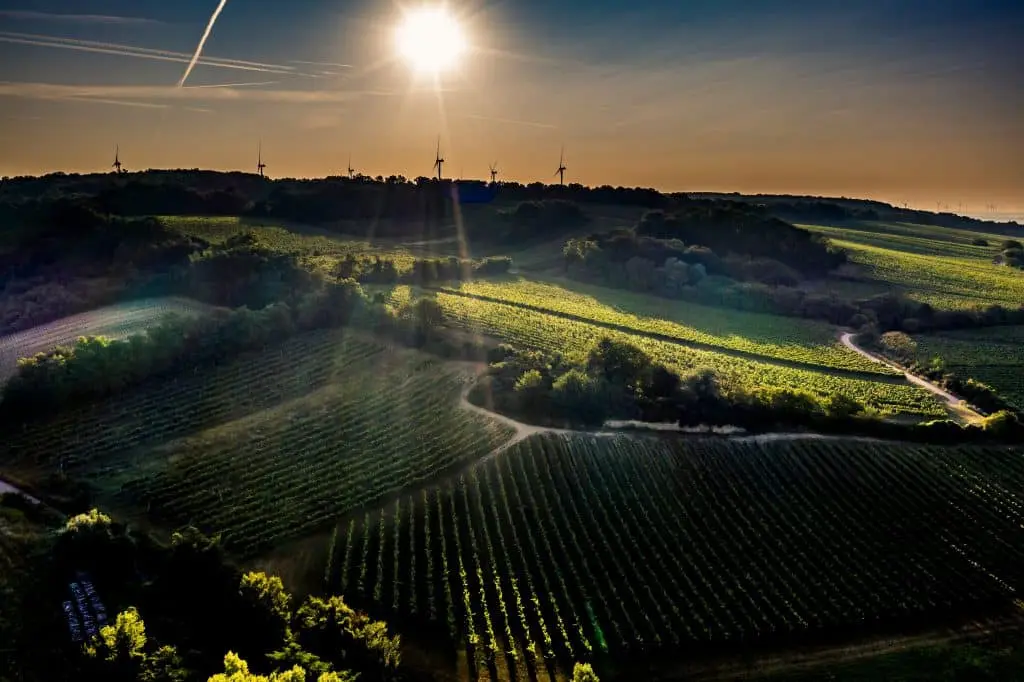
Our rolling hills were shaped by an ancient sea more than two million years ago. The higher vineyards have gravel with limestone deposits, while the lower areas around Göttlesbrunn feature deep, loamy soils. Carnuntum enjoys over 300 windy days a year, and the mix of continental and Pannonian influences creates perfect conditions for healthy grapes. Our soils retain water well, so irrigation hasn’t been necessary so far.
The name Carnuntum dates back to Roman times. The Romans made wine here more than 2,000 years ago—back then, Carnuntum was a major military camp, larger than London or Paris at the time. They brought their winemaking techniques and planted vines in this very region.
What do you love most about your work?
That’s easy—the harvest! More precisely, the work in the cellar during harvest time. It’s the most intense, but also the most rewarding period. In 2017, I experienced three harvests in one year—my dream come true! To accompany the wine from grape to bottle, to fine-tune every step, and ultimately capture the essence of the vineyard in the bottle… it’s incredibly fulfilling. But I also love the rest of the year—working outdoors, watching the vines change with the seasons. And of course, tasting our wines and hearing feedback from customers—that’s always a special moment.
Do you have a personal favorite among your wines? And which regions do you enjoy beyond Austria?
It’s hard to pick a favorite—that’s like asking parents which child they love most! (laughs) I recommend different wines depending on the season, occasion, or food pairing. Each one has its own personality.
I’m very open when it comes to wines from other regions and love discovering new ones—whether through sommeliers in restaurants or blind tastings with friends. Of course, I adore the classics: Burgundy, Bordeaux, Piedmont… wines with complexity and finesse. But I also enjoy wines from the New World—Oregon, Napa Valley, Tasmania.
Do you also work with the Austrian hospitality scene? Any well-known names among your clients?
We supply the Austrian gastronomy scene almost entirely through our distributors. We have a network of partners across the country. But there are a few long-standing clients we still serve directly—such as Zum Schwarzen Kameel and the Haas Haus in Vienna.