In Loschental near St. Paul (Carinthia, Austria), the Ritter vineyard produces Sauvignon, Chardonnay, Pinot Noir and other varieties, and will soon be adding new organic varieties to its range. Sabine David’s multi-award-winning wines are pioneering the future of Carinthia as a wine-growing region.
Carinthian wine is very popular, but usually more so outside the region. This is despite the fact that Carinthia is historically Austria’s oldest wine-growing region and is interesting in terms of both climate and geology. ‘We have the best conditions for wine production and there are some very good producers. But Carinthians sometimes still find it difficult to appreciate wine from their own region,’ sums up winemaker Sabine David in an interview. The mechanical engineer started as a career changer with her first hobby vineyard in 2010. When she acquired the Hof vulgo Ritter in St. Paul im Lavanttal in 2012, the foundation for professional wine production was laid.
Today, four vineyards thrive on two hectares of land with different soil characteristics. This is an exciting factor for wine connoisseurs. ‘I have limestone soil, primary rock, but also two metres of loam on a karst stock,’ reveals David. This is an unusual combination for Carinthia. “I find it exciting to see what the soils are like and how they influence the taste. Limestone wines are usually very light and mineral,‘ the winemaker continues, referring to the French Champagne region as the most famous of all limestone regions. ’Loam soil is heavy, and the wines are also broader
and heavier. Loam is powerful, limestone produces light and elegant wines.” Guests can taste the direct difference in three Chardonnays – and taste it too!

In addition to Sauvignon, Chardonnay, Muscat, Pinot Noir, Rotburger and Blauburger, new varieties are to be cultivated in the future. The new vineyard, which is organically farmed – i.e. without chemical plant protection products – is only a few months old. Souvignier Gris is grown there, but mainly Satin Noir and Cabernet Cortis, which are to be used to produce a cuvée. The three children, who are of nursery and primary school age, already help out actively in the vineyard. Dominique recently started brewing beer as a hobby. The winery also offers tastings at its idyllic farm, and the beers are now also available for purchase. In addition, the winery offers space for weddings, company outings and celebrations of all kinds.
Trade & Projects
The wines are appreciated in Austrian restaurants and hotels as well as by private customers, and are also exported to the USA. 10,000 bottles are produced annually, and the distinctive label features
an illustration by Sabine’s husband Dominique. Every year, the wines win several international gold and silver awards. Sabine has also started producing vermouth. “It was a dusty drink for a long time, but it’s back in vogue in the form of long drinks or as an aperitif! We serve it with tonic, for example, and it’s really popular. And we have everything we need for it: we
have the wine, we make the brandy and I add the herbs from the garden.”
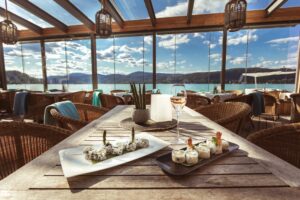
Last summer, she ran a pop-up wine bar on Lake Klopeiner
See together with Klagenfurt winegrowers, the first of its kind, stocked exclusively with Carinthian wine. ‘Wine and food lovers from all over Austria came by. Many said they had heard a lot about Carinthian wine but didn’t know where to get it.’ Increased word of mouth, better marketing and a reputation that does justice to local wines are things that still need to develop, according to the friendly Lavant Valley native, who
is working together with colleagues to achieve this. ‘I can only recommend going directly to the winemakers to get to know the wines and get an idea of their potential.’