“Twelve of the world’s most innovative mixologists shake, stir and pour their way through high-stakes cocktail challenges to win a life-changing prize.”
That’s how Netflix introduces its new original series Drink Masters — a ten-part reality competition dedicated to the art (and spectacle) of modern mixology. The concept follows a familiar recipe: much like The Final Table, where emerging culinary stars battle for gastronomic glory, Drink Masters invites bartenders to prove their worth before a panel of experts.
One thing is clear — Netflix has money. Technically speaking, Drink Masters even outshines The Final Table. Set in a glamorous, sprawling bar with a limitless kitchen, the show spares no expense to showcase its contenders as they aim to prove they’re among the best of the best.
But there’s a catch. While The Final Table truly gathered chefs from around the world, Drink Masters’ understanding of “the world’s most innovative mixologists” seems to begin and end in North America.
When “the world” means the United States
Most contestants are based in the US, with a few from Mexico and Canada. A quick glance at the current World’s 50 Best Bars list, however, shows only eight American bars — all of them in New York City or Miami. In contrast, European cities host twenty of the world’s finest bars, and, by extension, many of the world’s best bartenders. So Drink Masters’ self-proclaimed “global” line-up doesn’t quite hold up.
Undeniably skilled — yet not all professionals
That said, the majority of contestants are genuine masters of their craft, regardless of geography. Their creativity and technique shine throughout the show’s many elaborate challenges. Without giving too much away, let’s look at the first episode. The bartenders are asked to reimagine the world’s most ordered cocktail — the Margarita — while keeping its basic structure (Tequila, Triple Sec and lime juice) intact.
They have ninety minutes to prepare, moving seamlessly between the bar and a fully equipped kitchen. There’s smoking, foaming, cooking, gelling, re-distilling — you name it. One soon realises just how much of contemporary mixology now happens behind the stove rather than behind the counter.
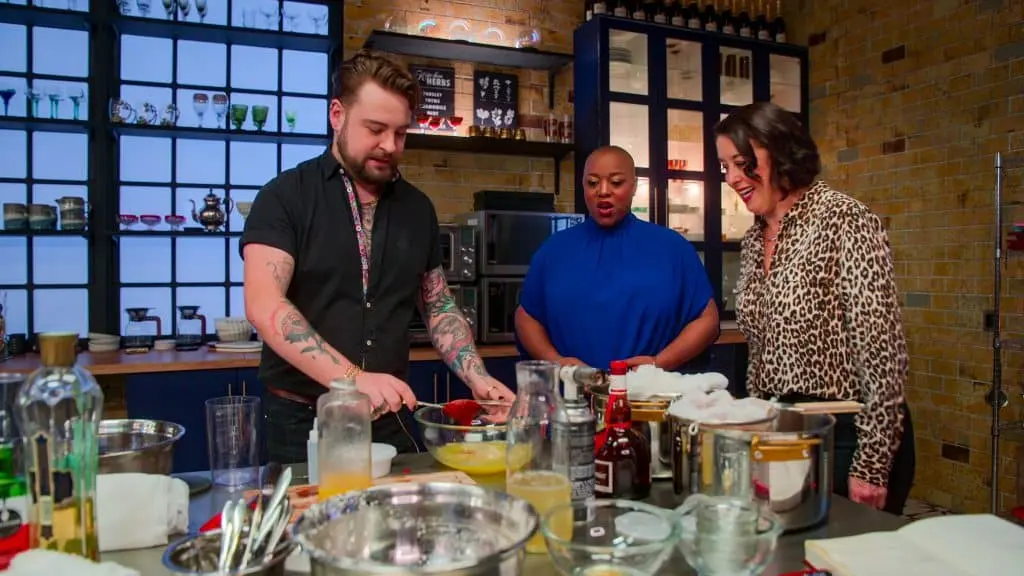
Later episodes push this even further, assigning desserts to be recreated as drinks — a task that exposes the contestants’ technical prowess and palate in equal measure.
To Netflix’s credit, the cast itself is diverse and lively, representing a genuinely colourful cross-section of the modern bar world. Among them, however, one cocktail influencer — known for aesthetic Instagram posts rather than bar experience — has sparked some raised eyebrows among professionals.
A feast for the eyes, not the palate
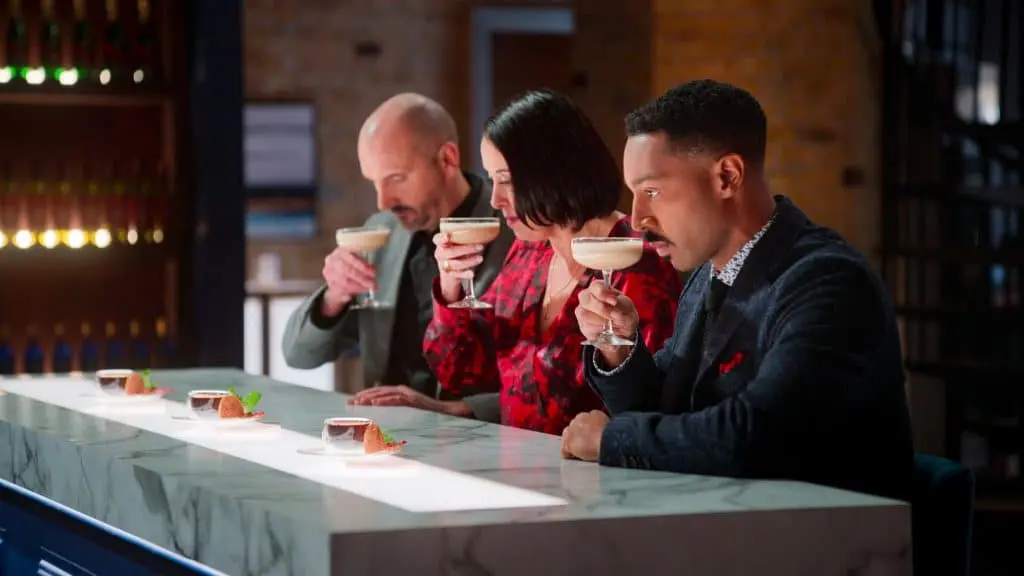
As viewers, we must rely on the judges for all flavour evaluations. Host and comedian Tone Bell, whose knowledge of bartending is admittedly limited, shares the judging table with industry veterans Frankie Solarik (Canadian bar legend and author) and Julie Reiner (bar owner and entrepreneur). Their expertise is unquestionable, and their verdicts form the backbone of the competition.
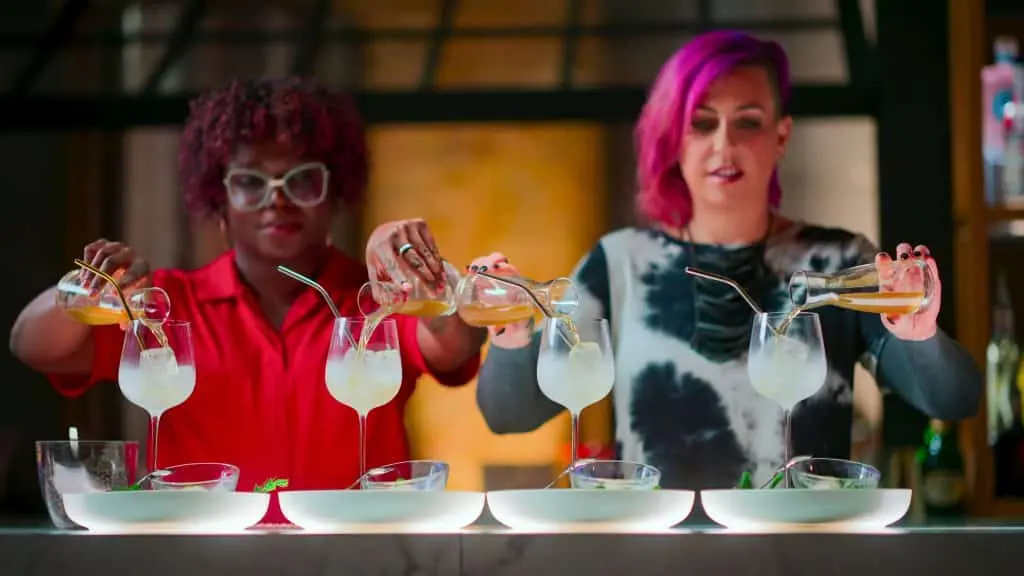
For the audience, though, visual appeal becomes everything — and that’s precisely what the show capitalises on. The aesthetics are the flavour. And that’s fine: television, after all, feeds on imagery.
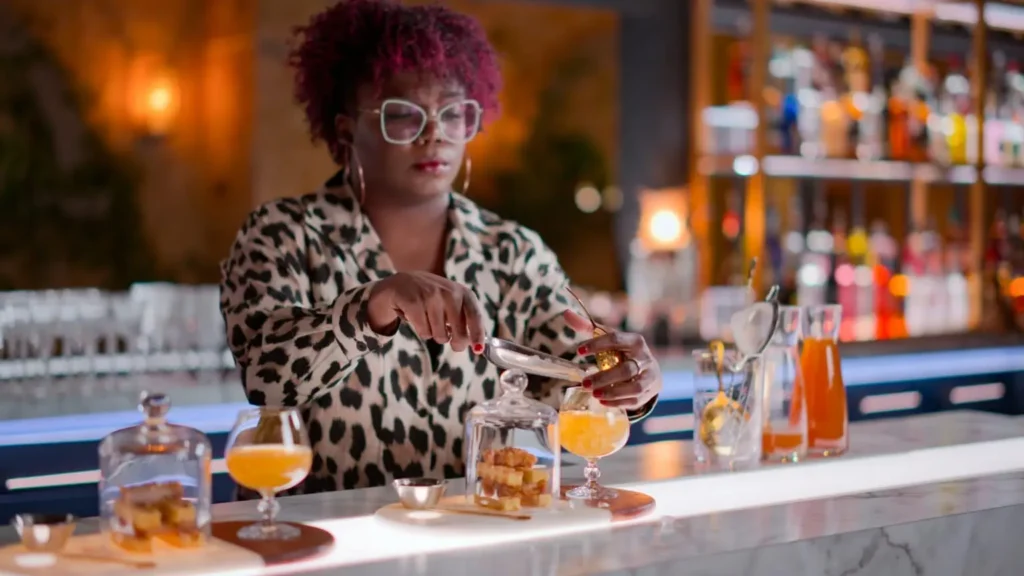
One particularly striking example is contestant Tao’s “Absolute Opera” — a cocktail inspired by the French Opéra cake. Vodka, sponge, butter, coffee, cacao nibs, lactic acid, almonds — each element meticulously distilled to capture the taste of coffee and chocolate without a trace of brown in sight. It’s mesmerising, even through the screen.
Each creation is paired with a small dessert, further amplifying the visual drama. Yet this emphasis on presentation occasionally borders on excess. In one episode, a minimalistic, garnish-free cocktail is criticised by the judges despite its excellence — a subtle reminder that this competition is about showmanship as much as skill.
Is Drink Masters worth the binge?
The premise feels familiar — perhaps too familiar. Whether it’s cooking, baking, real estate or beauty, the formula of “who will be the best” has long reached saturation. Still, the idea of giving bartenders a platform is a brilliant one. The world of mixology is creative, diverse and evolving — but this series rarely dives deep enough to show that reality.
A more authentic format might follow bartenders in their actual bars, capturing the rhythm, tension and poetry of a real night’s service. But that wouldn’t be Netflix.
If you can overlook the American focus and the glossy production, Drink Masters offers a pleasant hour’s escape. It delivers moments of genuine insight into the craft, a few sparks of inspiration — and plenty of beautiful glassware. Skipping a few minutes here and there doesn’t hurt, though.