At the Biohotel Stanglwirt, one of Austria’s most renowned and sought-after luxury resorts nestled at the foot of the Wilder Kaiser mountains, organic is not a trend. It is a conviction. But what does “organic” really mean, and how do you balance a regional culinary philosophy with the expectations of international guests? Thomas Ritzer, who has been head chef at the Stanglwirt for 21 years, spoke to us about exactly that.
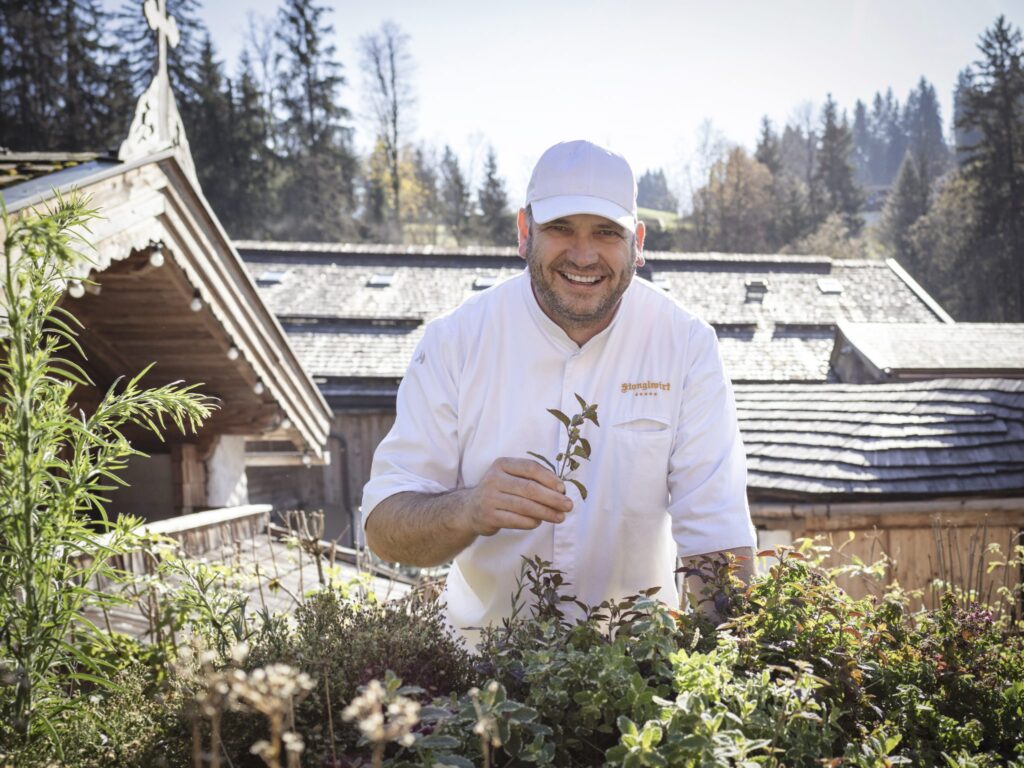
“Nothing is as constant as change,” Thomas Ritzer quotes the philosophy of Heraclitus of Ephesus. For over two decades, he has been responsible for the kitchen at the Stanglwirt, witnessing first-hand the social, economic, and above all culinary transformations of recent years. The most lasting shift, he notes, is the move towards meat-free cuisine. A change that must be handled with care in a traditional establishment. “In the more than 40 years I’ve worked in gastronomy, I’ve seen many trends come and go, from Mediterranean and Asian influences to molecular cuisine and the Nouvelle Cuisine of the 1980s,” recalls the likeable Tyrolean. “Some elements have endured to this day, others have disappeared. One trend, however, has firmly established itself and will certainly stay with us: the vegetarian and vegan lifestyle. This development is partly due to a generational shift, and partly to a growing awareness of sustainability, regionality, and animal welfare. Of course, we wanted to respond to this and have expanded our menus to include many vegetarian and vegan dishes, without losing our roots in traditional, nature-oriented cuisine.”
“Organic” from exotic to bio hotel
The origins of what is now known as the Biohotel Stanglwirt date back to the 17th century, a time when living and working in harmony with nature was the only possible way of life. In the 1970s, host Balthasar Hauser had the vision of reviving exactly this harmony, a hotel where guests could fully relax in tune with nature, far from everyday stress, electromagnetic exposure, and chemically treated materials. “Back then, ‘organic’ was still something exotic,” Ritzer smiles, though today the concept is second nature in his kitchen. Even then, Hauser consistently relied on natural building materials and stood firm against skepticism, with success. Soon, guests didn’t just want to stay in an organic hotel, they wanted to taste it too.
“For the kitchen, this meant a new and exciting challenge: converting a large portion of our products to organic quality,” the head chef explains. “Today, around 80% of the products at the breakfast buffet come from certified organic sources, including cold cuts from the organic butcher Juffinger in Thiersee, eggs from regional organic farms, and dairy products from our own organic hay-milk farm. For us, this is not just a mark of quality, but an expression of naturalness, authenticity, and regionality that has been lived for generations.”
Regional food
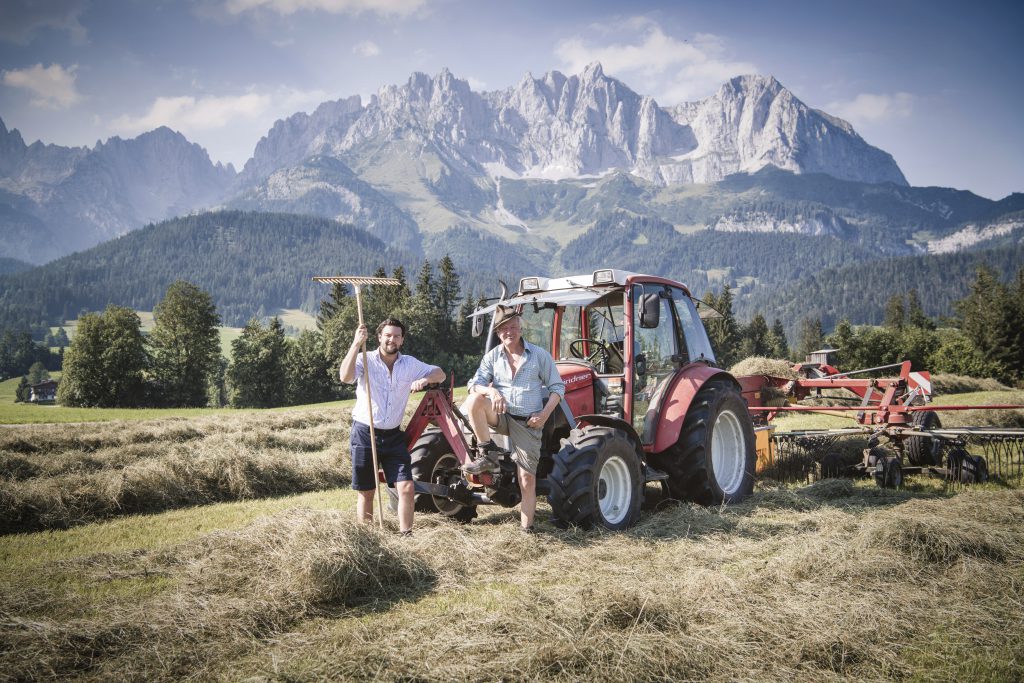
Agriculture plays a central role at the Biohotel Stanglwirt. “The hotel quite literally grew around the cowshed, with the accompanying manure heap,” laughs eleventh-generation host Maria Hauser, adding, “It’s probably the most photographed manure heap in Austria.”
100% of the drinking milk, as well as yogurt, curd cheese, mountain cheese, and other varieties, come from the hotel’s own farm, complete with its own dairy and butcher’s shop. Organic farming is overseen by Johannes Hauser, who recently opened the world’s first hotel-owned organic energy power plant together with the entire Stanglwirt family.
What often goes unnoticed, Thomas Ritzer tells us, are the Stanglwirt’s own fishing waters. Within the overall concept of “organic,” sustainable fish sourcing is, of course, equally essential. “Fortunately, a lot has changed over the past twenty years when it comes to local ingredients. Young, committed agronomists have dedicated themselves to producing high-quality products. There are also excellent fish breeders who raise native species in our largely untouched natural environment, with its cold mountain streams, as well as our own fishing waters,” Ritzer explains. “For me, fish from local waters is an exceptionally valuable product. The quality can easily compete with turbot, sea bass, or even lobster.”
At this iconic Austrian hotel, the focus on regionality is now effortlessly balanced with the expectations of prominent and international guests. “I like the quote ‘To please everyone is an art that no one can master,’” Maria Hauser says in conversation. “The Stanglwirt brand stands for regionality, sustainability, and living in harmony with nature, and our guests from all over the world truly appreciate that. They can feel that we mean it sincerely and often emphasize that they don’t feel like they’re in a sterile five-star design hotel, but rather at home.”
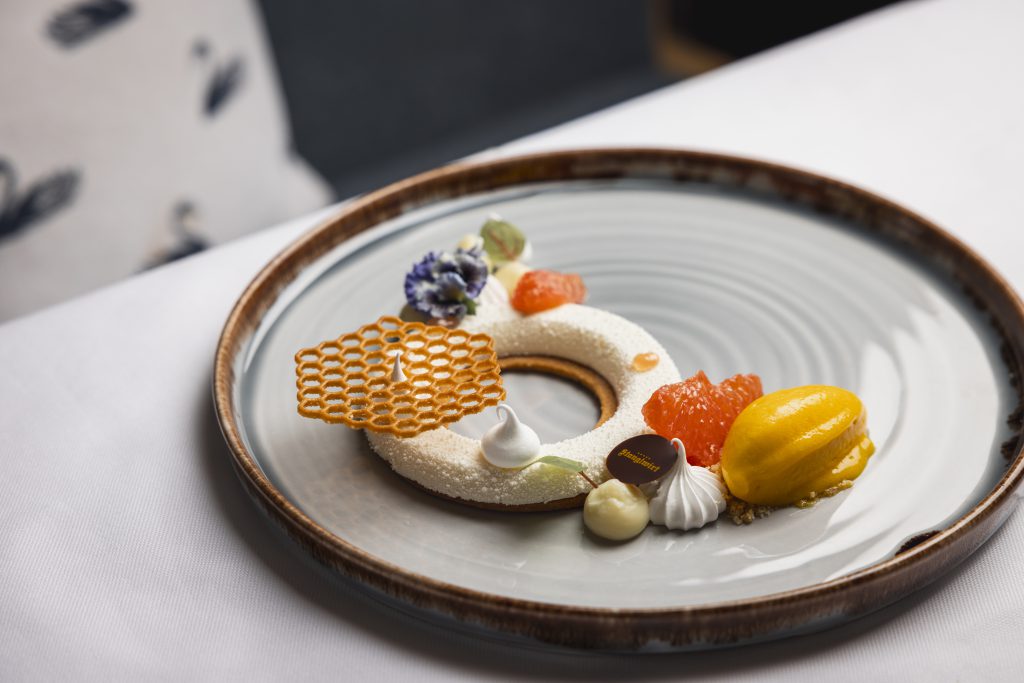
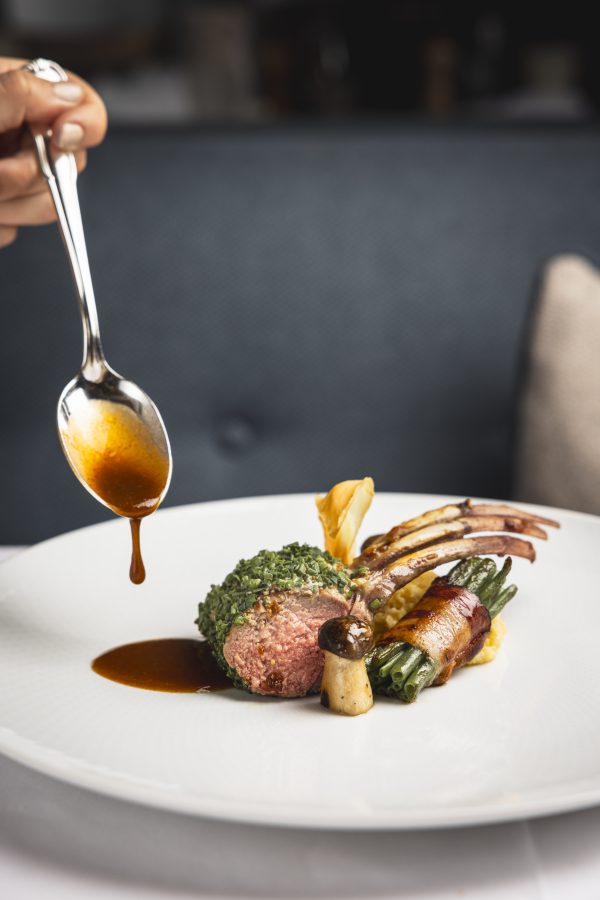
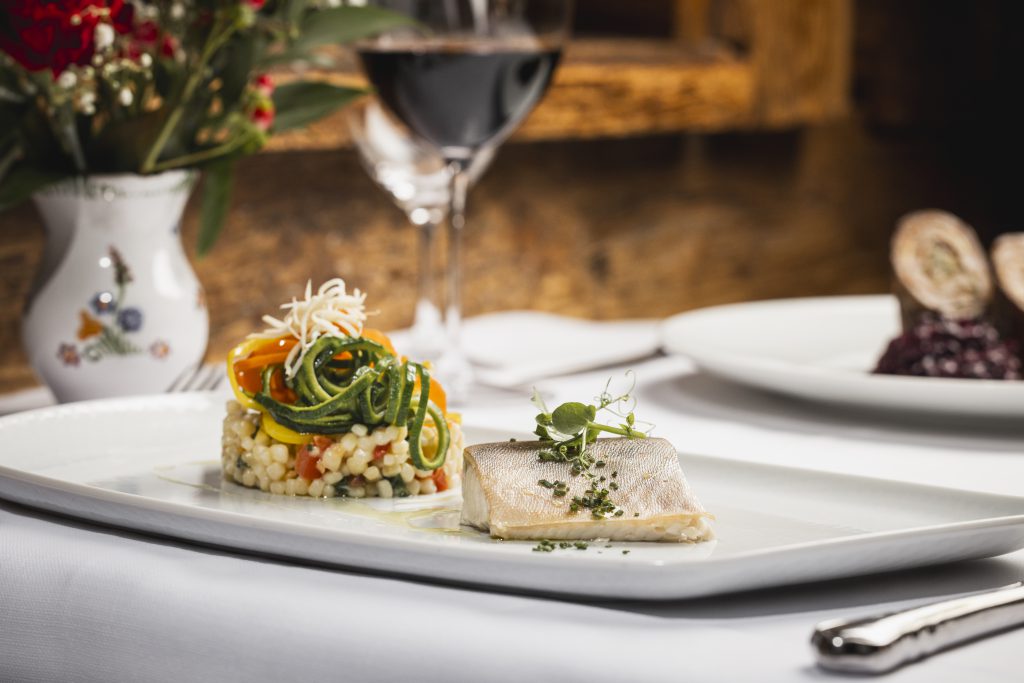
A new opening and staying curious
While seasonal stars such as game, pumpkin, and beetroot once again take center stage in the kitchen, a new à la carte family restaurant, “Leni’s,” has opened at the hotel. “It complements the traditional inn with its strongly regional cuisine and the hotel restaurant with its international focus by adding another popular facet: a healthy, Mediterranean high-end cuisine for all generations,” Ritzer reveals.
After 21 years as head chef, one principle still holds true for him. “A rolling stone gathers no moss. Even if it can be challenging at times, it’s important for us to keep evolving. The art lies in preserving time-honored traditions, not forgetting your roots, while also adapting to new circumstances. Our motto is: don’t stand still, stay curious, and always make the best of every situation. And something I always like to pass on to my younger colleagues: cook with love and be proud of your craft, because what you do with love will turn out well.”